The QR65 wins for most desk setups. It’s not because it sounds better, it’s because it does three other jobs the A2+ doesn’t even attempt. But if sound quality is the only thing you’re optimizing for and everything else is noise, the A2+ earns its reputation.
Looking for more options? See our best desktop speakers 2026 ranking.
The Quick Answer
The Edifier QR65 ($370) replaces your desk charger, includes aluminum stands, adds LDAC Bluetooth 5.3, and throws in a remote control. The Audioengine A2+ ($279) does none of that. It just plays music. Really, really well.
For engineers building a clean desk setup, the QR65 eliminates more boxes and cables. The 65W GaN charger alone would cost $50+ as a standalone product. Add the $35 stands Audioengine charges separately, and the $91 price gap between these two speakers effectively disappears.
The A2+ fights back with Class A/B amplification, >95dB SNR, and THD+N under 0.05%. Those aren’t marketing numbers. Reviewer consensus from Tom’s Guide and T3 consistently notes the A2+’s mid-range clarity as a step above similarly priced competitors. If you close your eyes and just listen, the A2+ has a slight edge in vocal detail.
But you don’t close your eyes at your desk. You look at cables.
How They Actually Sound at 60cm
Both speakers use 2.75-inch woofers. The QR65 pairs them with 1.25-inch tweeters and pushes 70W RMS total across a 55Hz-40kHz range. The A2+ runs smaller 0.75-inch tweeters with 30W RMS (60W peak) across 65Hz-22kHz. On paper, the QR65 wins every measurable spec.
In practice, it’s more complicated than that. (Isn’t it always?)
The QR65 has more bass and more volume. At desk distance, 70W is genuinely excessive. I had it at 35-40% for most listening. The low end reaches 55Hz, which means you feel kick drums and bass lines without needing a subwoofer. The A2+ rolls off at 65Hz, and you notice the difference on electronic music and hip-hop.
The A2+ counters with mid-range refinement. Vocals, acoustic guitar, podcast speech, anything in that 500Hz-4kHz range sounds slightly more natural. This is where Class A/B amplification and that low THD+N figure show up in practice, not on a spec sheet. T3 gave the A2+ a perfect 5/5, and mid-range clarity was a recurring theme in their review.
Here’s my honest take. At $279 vs $370, the sound quality gap is maybe 10-15% in the A2+’s favor on mids. The QR65 wins on bass extension, total volume, and frequency range. Neither will embarrass you. Both are real speakers, not glorified laptop supplements.
I switched between both on the same desk for a week. During work hours with Spotify on shuffle, I genuinely couldn’t tell which one was playing unless I looked. The difference only emerged during focused, deliberate A/B listening with specific tracks. Your Slack notification sound will be identical on both.
Everything the A2+ Doesn’t Have
This section is where the comparison gets uncomfortable for Audioengine. The QR65 includes features the A2+ either charges extra for or simply doesn’t offer.
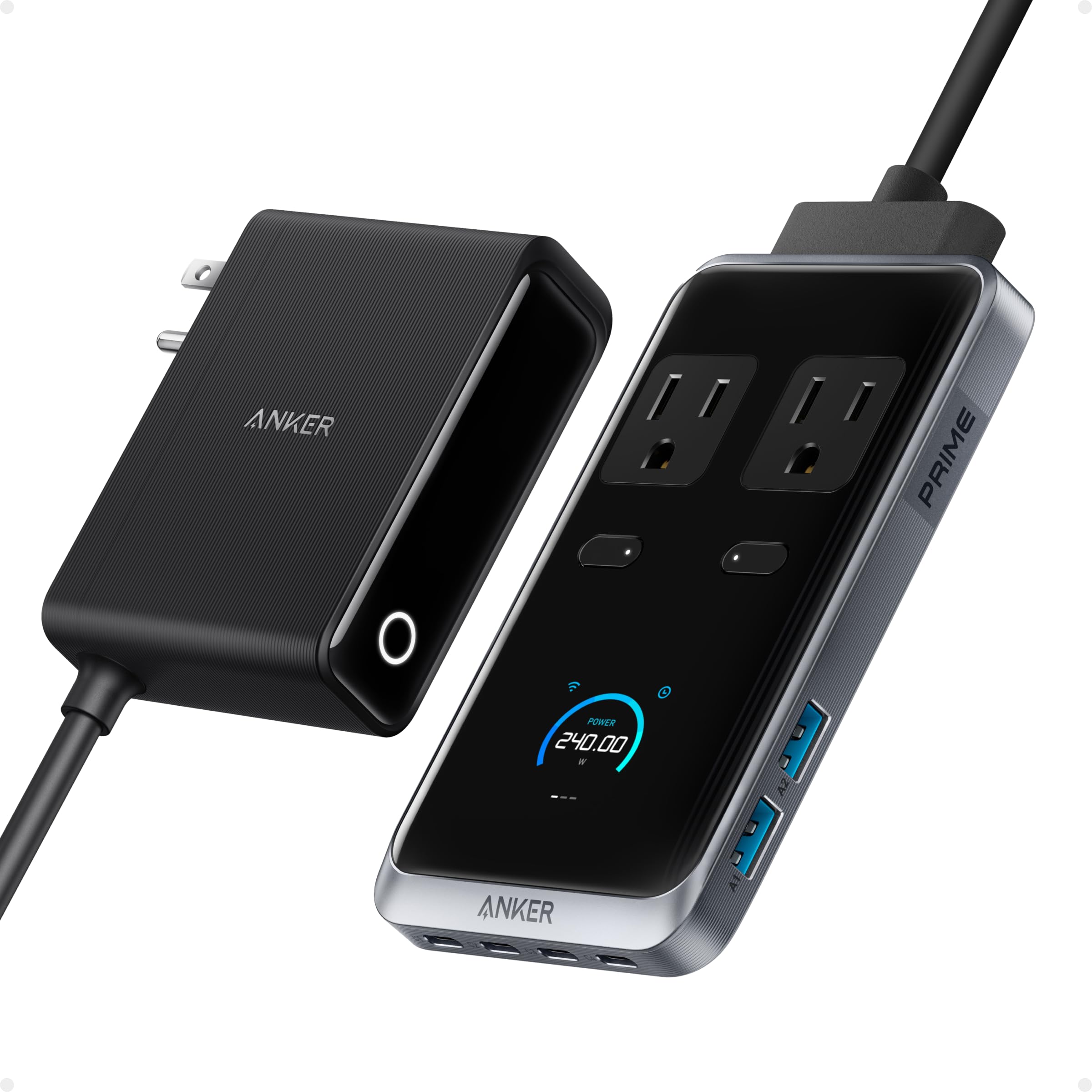
GaN charger. The QR65’s right speaker has a built-in 65W GaN charger with two USB-C ports and one USB-A. Plug in a laptop, a phone, and earbuds. No separate charger needed. A comparable standalone GaN charger costs $50-70 on Amazon. The A2+ has no charging capability at all.
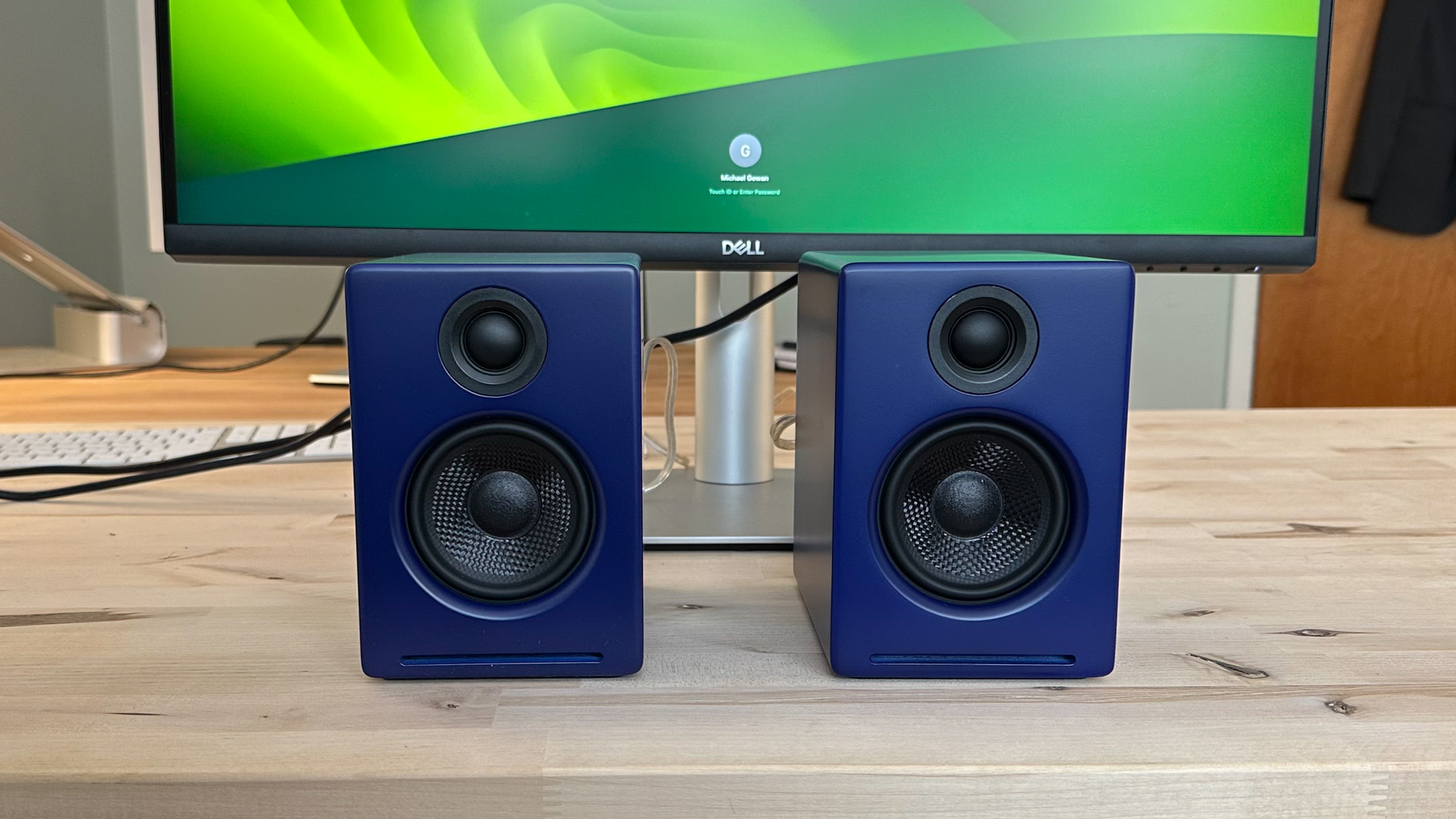
Stands. Aluminum, angled, included in the box. Audioengine sells their DS1 stands for $35 extra. Without stands, the A2+ fires slightly below ear level on most desks.
Remote control. The QR65 includes one. The A2+ has a volume knob on the back of the powered speaker. On the back. Meaning you reach behind the speaker to adjust volume. In 2026. (I genuinely thought I was missing something when I first set it up. Nope, that’s the design.)
Optical input. The QR65 has it. The A2+ doesn’t. If you’re connecting to a TV, console, or DAC with optical out, this matters.
LDAC vs aptX HD. Both run Bluetooth 5.3. The QR65 uses LDAC, which pushes up to 990kbps at 24bit/96kHz. The A2+ uses aptX HD at 576kbps. In blind testing, the difference is subtle. But LDAC is the higher-spec codec, and Android users get native support.
Infinity Mirror RGB. Look, I know. RGB on speakers sounds like a gaming gimmick. But the QR65’s Infinity Mirror effect is actually tasteful. App-controlled, 16 million colors, or just off entirely. The A2+ has no lighting. Whether this is a pro or a con depends entirely on your desk aesthetic.
What does the A2+ have that the QR65 doesn’t? A 3-year warranty versus the QR65’s 2 years. Hand-finished MDF cabinets versus Edifier’s molded enclosures. And 21 years of American audio brand heritage versus a Chinese company most people associate with cheap PC speakers. That brand trust is real, even if the spec sheet doesn’t reflect it.
The A2+ is priced at $279 for the speakers alone. Add $35 for the DS1 stands and you’re at $314, still without charging, optical, RGB, or a remote. The QR65 at $370 includes all of those. The real price gap isn’t $91. It’s $56 for a pile of features the A2+ can’t match at any price.
The Showdown
| Feature | Edifier QR65 ($370) | Audioengine A2+ ($279) | Klipsch The Fives ($500+) |
|---|---|---|---|
| Total RMS power | 70W | 30W (60W peak) | 160W |
| Drivers | 1.25" tweeter + 2.75" woofer x2 | 0.75" tweeter + 2.75" woofer x2 | 1" Tractrix horn + 4.5" woofer x2 |
| Frequency range | 55Hz - 40kHz | 65Hz - 22kHz | 50Hz - 25kHz |
| Bluetooth | 5.3, LDAC | 5.3, aptX HD | No |
| USB-C audio | Yes | Yes (24-bit DAC) | No |
| Optical input | Yes | No | Yes |
| HDMI-ARC | No | No | Yes |
| Built-in charger | 65W USB-C x2, 60W USB-A | None | None |
| Remote control | Yes | No | Yes |
| Stands included | Aluminum | No ($35 extra) | Rubber feet |
| RGB lighting | Infinity Mirror | None | None |
| Amplifier class | Class D | Class A/B | Class D |
| SNR | Not published | >95dB | Not published |
| THD+N | Not published | <0.05% | Not published |
| Desktop EQ app | Mobile only | None | Klipsch Connect |
| Warranty | 2 years | 3 years | 2 years |
| Review scores | Tom’s Guide 4.5/5, Pocket-lint 9/10 | T3 5/5, Tom’s Guide 4/5 | Various 4-4.5/5 |
| Company | Beijing, est. 1996, owns STAX | American, est. 2005 | Indianapolis, est. 1946 |
About the Klipsch. If money isn’t the constraint, the Klipsch The Fives ($500-700 depending on sales) exist in a different category. 160W RMS, 4.5-inch woofers, Tractrix horn tweeters, HDMI-ARC for TV use, phono preamp for turntables. They’re also 22.5 pounds and massive. Not desk speakers in the way the QR65 and A2+ are. But if your desk can handle them and your budget allows it, they’re the premium reference point.
Pick Your Fighter
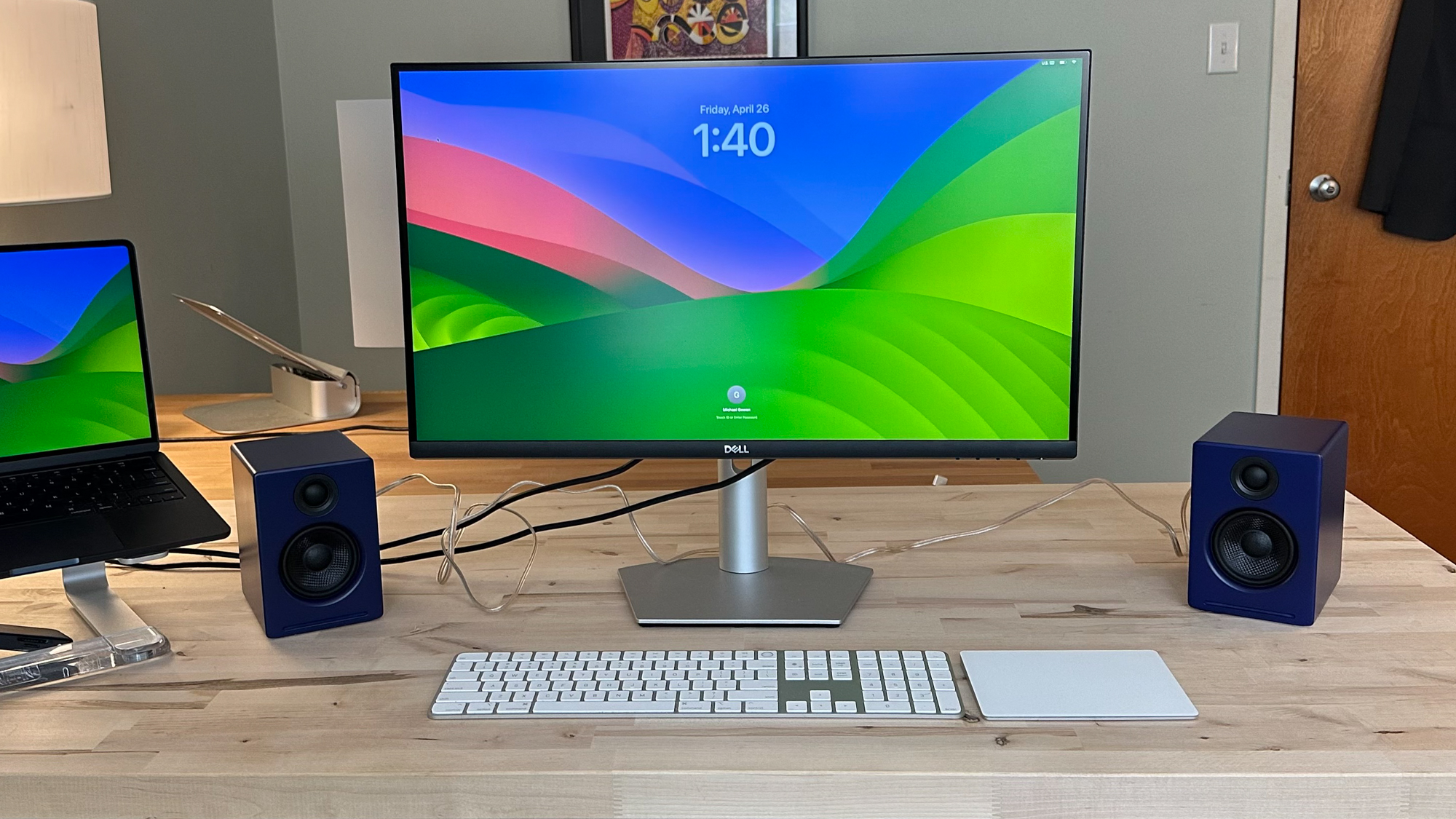
Buy the QR65 if you want fewer things on your desk. The built-in charger, included stands, remote, and optical input mean you’re removing a charger brick, a stand purchase, and a reach-behind-the-speaker habit from your setup. You also get more bass, more volume, and LDAC wireless. It’s the Swiss Army knife pick. Read our full QR65 review for the three-week daily use breakdown.
Buy the A2+ if sound is your religion and everything else is heresy. The Class A/B amplifier and published THD+N numbers aren’t marketing. The A2+ has a mid-range warmth that the QR65’s Class D amp doesn’t quite match. If you already have a charger, already have stands, and don’t care about RGB or remotes, the $279 price is genuinely fair for the audio quality. Just know that the volume knob is on the back. You will be annoyed.
Neither? Consider the Klipsch The Fives ($500+) if you want to solve desktop audio once and never think about it again. Or drop down to the MCHOSE K20 Pro at $30 if audio quality is “good enough” and you’d rather spend the $340 difference on a monitor upgrade.
Related: Read the full Edifier QR65 review for the three-week breakdown. See where both rank in our best desktop speakers 2026 guide. For more on Edifier and Chinese audio brands, check our Chinese brands desk gear guide.
-> Check Edifier QR65 on Amazon -> Check Audioengine A2+ on Amazon
This post contains affiliate links. DeskForged earns a small commission if you buy through them, at no extra cost to you. Neither product was provided by the manufacturer.