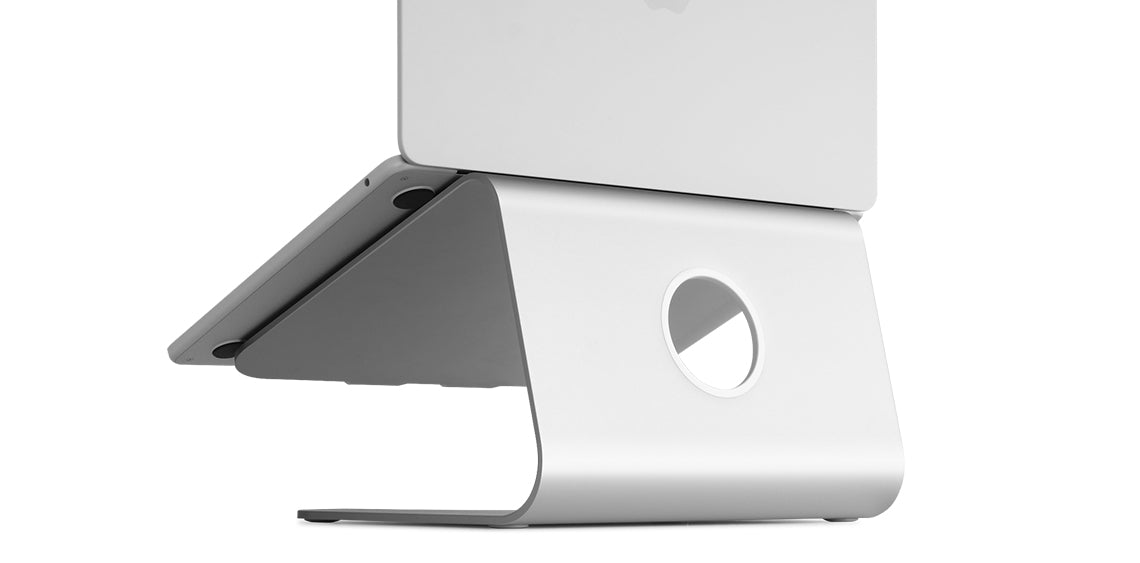
A $50 laptop stand does the same job as a stack of textbooks. But it does it without your MacBook sliding off at 2 AM during a deadline.
I’ve been through seven laptop stands in the past two years. Some aluminum. Some plastic pretending to be aluminum. One was literally a folding cookbook holder from Daiso that worked surprisingly well for three months before the hinge gave up. The point is: this category is full of overpriced metal and underpriced junk, with a surprisingly thin band of “actually worth buying” in between.
Here’s that band.
Our Testing Approach
Every stand in this ranking spent at least two weeks on my desk holding a 14-inch ThinkPad or a MacBook Air. We measure:
- Stability – does it wobble when you type? How about when you accidentally bump the desk?
- Height and angle – measured with a ruler. Seriously. (My wife asked why I was photographing a ruler next to laptop stands at 11 PM. Fair question.)
- Heat dissipation – surface temperature after 4 hours of sustained load, measured with an IR thermometer
- Build quality – material thickness, hinge longevity, rubber pad adhesion
- Portability – weight, folding mechanism, travel-friendliness
No brand pays us. No affiliate deal changes our ranking.
The Short List
Best Overall: Rain Design mStand – $43 Best Budget: Lenovo Yinenger Folding Stand – $5 Best Adjustable: EPN (Aipu) Aluminum Riser – $18
#1. Rain Design mStand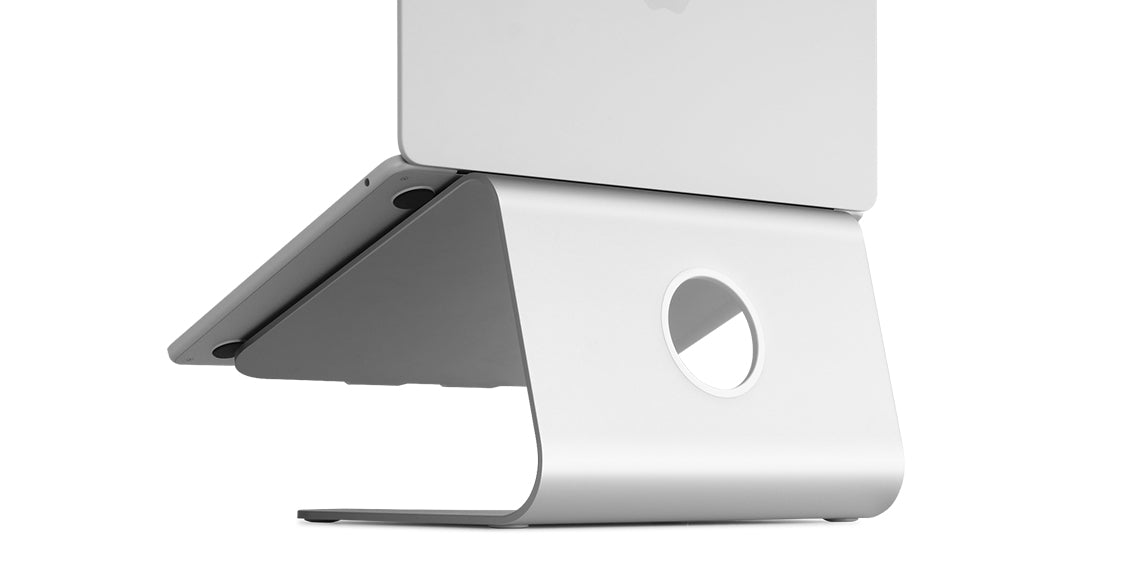
Score: 9.2/10 | Price: $43
The mStand is boring. I mean that as high praise.
Single piece of aluminum, bent into a curve. No hinges. No adjustment. No moving parts to break. It raises your screen exactly 5.9 inches (150mm) and that’s it. You put your laptop on it, plug in an external keyboard, and forget about it for three years.
The aluminum panel doubles as a passive heat sink – I measured 3-4 degrees Celsius cooler surface temps compared to running the same laptop flat on a desk. Not dramatic, but real. Cable routing through the back hole keeps things tidy. The rubber pads are thick enough that nothing touches raw aluminum.
But here’s the thing – it’s not adjustable. At all. If 5.9 inches isn’t the right height for your setup, you’re stuck. And at roughly 1.4 kg, this is a desk-only piece. Nobody’s throwing this in a backpack.
Why it’s #1: Fifteen years of design iteration and it still hasn’t needed a V2. That’s the kind of boring I respect.
#2. Twelve South Curve SE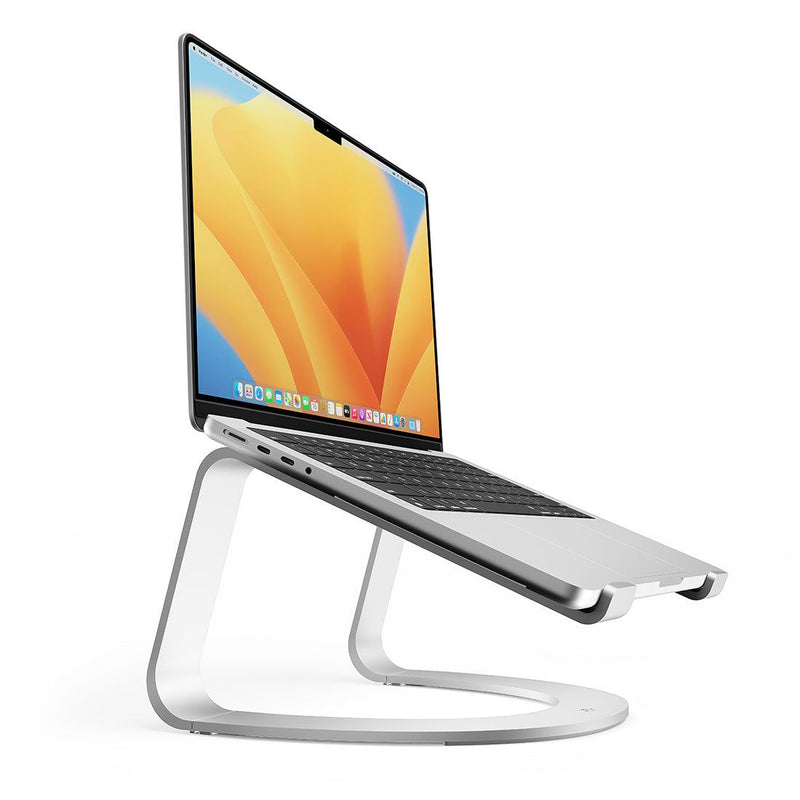
Score: 8.8/10 | Price: $39
The Curve SE is Twelve South’s answer to people who thought the original Curve ($60+) was overpriced. It comes in three pieces instead of one – a base and two clip-on arms. Assembly takes maybe 90 seconds.
6.5 inches of elevation. 683 grams. The two-arm design leaves the bottom completely open for airflow, which is better than the mStand’s solid shelf approach. I measured a consistent 2-degree advantage in sustained thermal tests.
Actually, scratch that – the advantage was 2 degrees on the MacBook Air but closer to 1 degree on the ThinkPad. The ThinkPad’s bottom-firing fans kind of negate the open-air benefit. So: your mileage varies based on laptop chassis design.
The trade-off is stability. Those clip-on arms aren’t welded – they’re friction-fit. Typing directly on the laptop produces a slight lateral sway that the mStand doesn’t have. Not dangerous. But noticeable.
Is it $4 better than the mStand? Honestly, no. But if airflow matters to you more than rock-solid rigidity, it’s a valid pick.
Why it’s #2: Best thermal design in a non-adjustable stand. The modular build is clever but costs stability points.
#3. EPN (Aipu) Aluminum Adjustable Stand
Score: 8.5/10 | Price: ~$18
This is where Chinese manufacturing gets interesting.
EPN – known as 埃普 (Aipu) on Taobao – makes a Z-shaped aluminum riser that adjusts angle and height through a friction hinge. It holds laptops up to 17 inches, supports 20 kg (44 lbs), and folds flat for travel. At $18 on Amazon, it costs less than lunch for two in Singapore.
The good: angle adjustment is genuinely useful. I run mine at about 25 degrees for typing, 40 degrees when I’m using it as a secondary display. The aluminum is thick enough – 3mm by my caliper measurement – that it doesn’t flex under normal use.
The bad: after about six weeks of daily adjustment, the friction hinge starts to loosen. Not catastrophically. But I went from “holds any angle perfectly” to “slowly drifts 2-3 degrees over an hour.” (I may have tightened the hex bolt with a 2.5mm Allen key. I may have voided whatever warranty exists on an $18 stand. It worked.)
For the price, the EPN is absurd value. It does 80% of what a $50 Roost stand does.
Why it’s #3: Best value in the category. The hinge durability knock is real but fixable.
#4. Lenovo Yinenger Folding Stand
Score: 8.2/10 | Price: ~$5
Five dollars.
The Lenovo ecosystem brand (异能者, literally “Extraordinary Ability Person” – Chinese brand naming is something else) makes a folding aluminum stand that costs less than a large coffee. It’s thin, it’s light, it’s basic. Two angled panels with silicone grips. Folds to about 5mm thick.
I bought this as a throwaway travel option and ended up using it for three months straight. The elevation is modest – about 3.5 inches – but enough to improve typing angle. The silicone pads grip well. Airflow underneath is decent.
Where it falls short: there’s no cable management, no height adjustment, and the aluminum is thin enough that I wouldn’t trust it with a heavy 17-inch gaming laptop. This is a MacBook Air / ultrabook stand. Period.
But for $5? Come on.
Why it’s #4: Absurdly cheap and actually functional. The “good enough” option for most people.
#5. Lenovo Legion Ice Blade (Bing Ren) Rotating Stand
Score: 7.8/10 | Price: ~$60
The Ice Blade is Lenovo’s premium gaming laptop stand. 4mm CNC-machined aluminum, 360-degree rotation, height-adjustable arms. It looks like something from a mech anime, which is probably intentional for the Legion crowd.
The rotation mechanism is buttery smooth – genuinely the best I’ve tested. Showing your screen to a coworker means a one-finger swivel instead of picking up the whole laptop. For that specific use case, nothing else comes close.
The problem: it’s $60 for a laptop stand. And the height adjustment range is narrow – maybe 2 inches of travel. If you’re spending this much, a monitor arm with a laptop tray gives you vastly more flexibility for similar money.
I keep almost recommending this, then talking myself out of it. The rotation is great. Everything else is just okay.
Why it’s #5: Premium build and unique rotation feature, but hard to justify the price against more versatile alternatives.
How They Compare
| Rank | Product | Price | Material | Adjustable | Height | Weight | Score |
|---|---|---|---|---|---|---|---|
| 1 | Rain Design mStand | $43 | Aluminum (unibody) | No | 5.9" | 1.4 kg | 9.2 |
| 2 | Twelve South Curve SE | $39 | Aluminum (3-piece) | No | 6.5" | 683g | 8.8 |
| 3 | EPN (Aipu) Riser | $18 | Aluminum | Yes | Variable | ~400g | 8.5 |
| 4 | Lenovo Yinenger | $5 | Aluminum (thin) | No | 3.5" | ~200g | 8.2 |
| 5 | Legion Ice Blade | $60 | CNC Aluminum | Yes + Rotate | Variable | ~800g | 7.8 |
What About the Popular Western Picks?
Roost V2 ($60): Great stand, genuinely portable, but the plastic construction feels wrong at that price. The EPN does 80% of the job for 30% of the cost.
Nulaxy C1 ($30): Solid mid-range pick. If you want adjustability with better hinge durability than the EPN and don’t mind paying a bit more, this is reasonable. Just not as interesting to write about.
MOFT Laptop Stand ($25): The adhesive-back origami approach. Clever, but I’ve had adhesive failure twice in humid Singapore weather. Not for tropical climates.
The Verdict
For a permanent desk setup, buy the mStand. It’s the answer to a question nobody needs to keep asking. For travel or a tight budget, the Lenovo Yinenger at $5 is so cheap it almost feels like a mistake. And if you want adjustability, the EPN riser punches way above its price class – just bring a 2.5mm Allen key.
The broader pattern here: Chinese manufacturers are making aluminum laptop stands that are 70-80% as good as premium Western brands at 20-30% of the price. The gap is in hinges, rubber pad longevity, and packaging. The actual aluminum? Basically the same.
You might also like: Best Monitor Risers 2026 | Best USB-C Docks and Hubs
Real use, real opinion. This post contains affiliate links – DeskForged earns a small commission if you buy through them, at no extra cost to you.


